Lebanon marks medical first with VOLT technique for atrial fibrillation at LAUMC–Rizk Hospital
A groundbreaking cardiac procedure performed by Dr. Johnny Abboud introduces a faster, safer, and more precise approach to treating atrial fibrillation, positioning Lebanon at the forefront of regional heart care innovation.
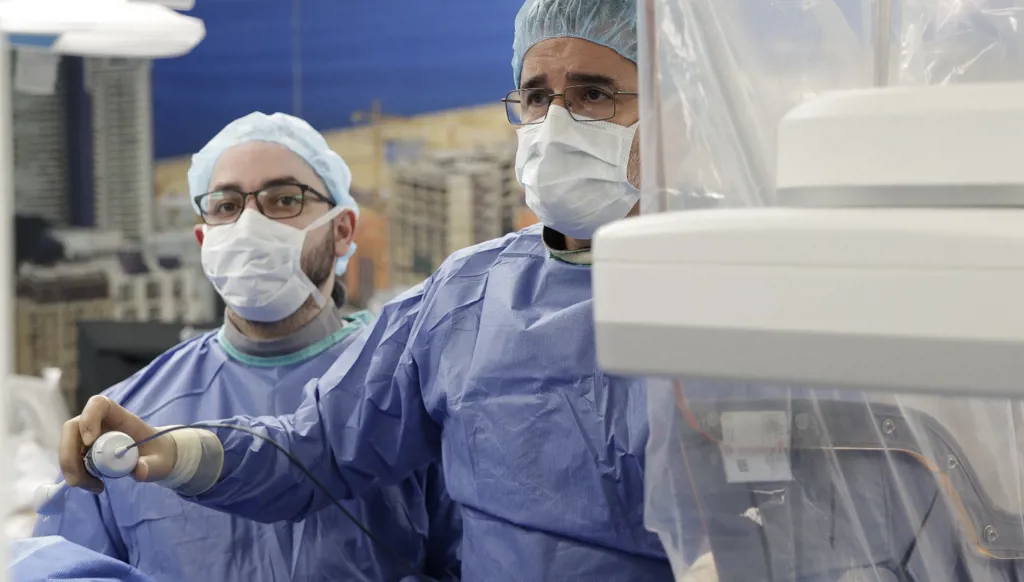
On the right, cardiology and cardiovascular specialist Dr. Johnny Abboud, and on the left, a member of the surgical team assisting in the operating room.
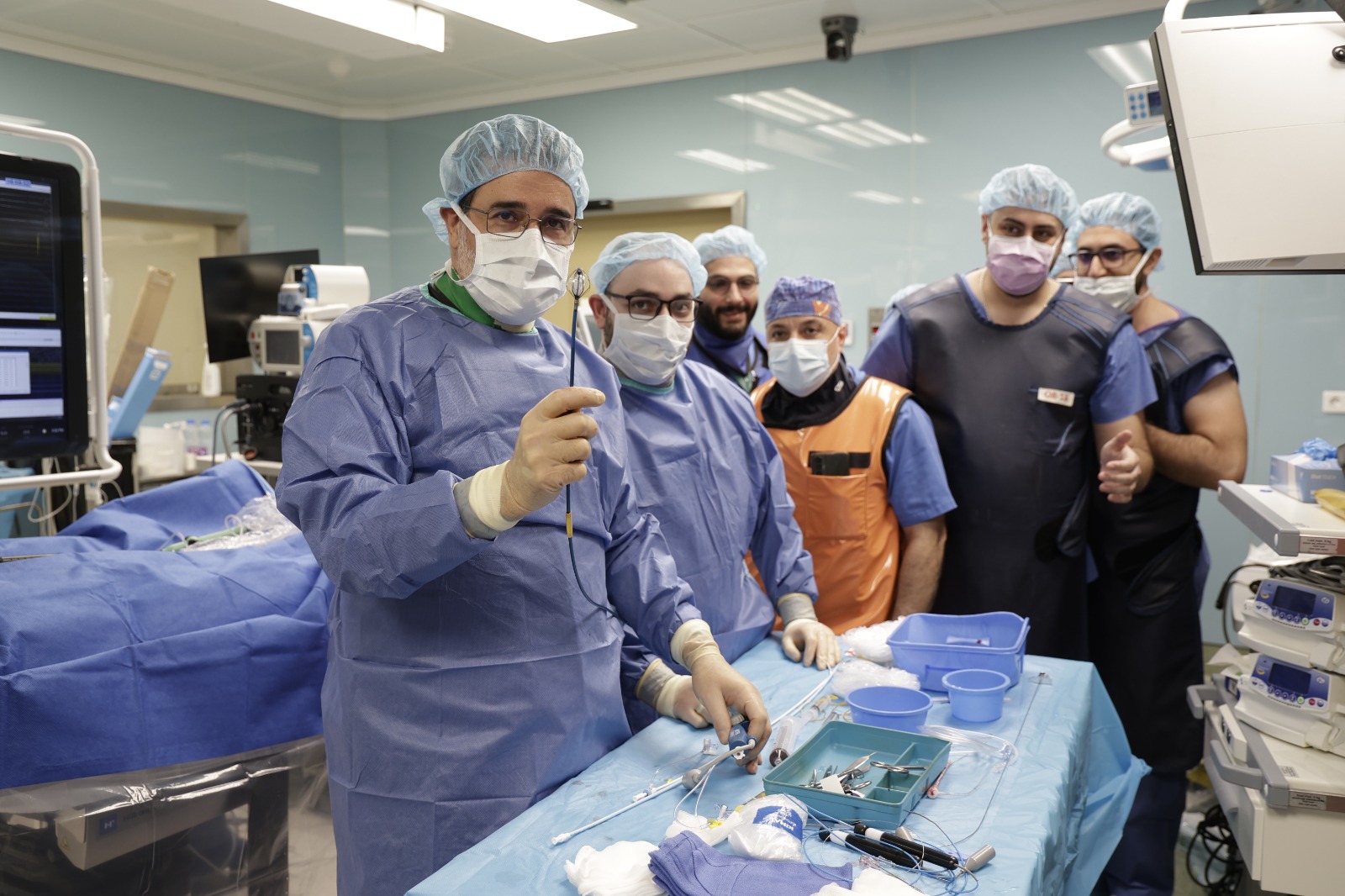
This advanced procedure was conducted by cardiovascular specialist Dr. Johnny Abboud, alongside a specialized medical team, marking a qualitative leap in the development of heart disease treatments at both local and regional levels.
Dr. Abboud and his surgical team in the operating room.
What are the risks of atrial fibrillation?
The VOLT technique is a new tool for treating atrial fibrillation, a serious cardiac disorder characterized by irregular heartbeats that cause palpitations and fatigue. It is also associated with an increased risk of stroke and heart failure. This procedure therefore offers a more precise, data-driven intervention, contributing to better outcomes by improving accuracy and efficiency while minimizing potential risks.
What are the positive outcomes of the new technique for treating atrial fibrillation?
Regarding patient care, the use of this technique shortens surgery time, improves safety, and accelerates recovery, positively affecting long-term outcomes and the quality of life for patients with heart rhythm disorders.
According to cardiovascular specialist Dr. Johnny Abboud, who performed the operation on a 35-year-old man and spoke to Annahar, atrial fibrillation is considered very common among the elderly in the region, as its prevalence increases with age, although it can also affect young adults early. It causes fatigue in the heart muscle and poses a risk of stroke and fatigue that prevents patients from leading a normal life. It also leads to a significant increase in heart rate, causing considerable discomfort and continuous anxiety for the patient, and can even wake them at night, as this condition may strike at any time, even while sitting or sleeping.
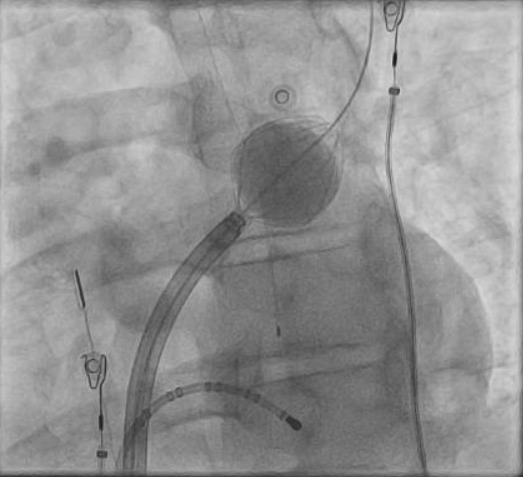
X-ray image.
However, most doctors in Lebanon and the region treat this condition using traditional methods and medications. The conventional technique involves ablating the areas where electrical malfunction occurs in the heart. This method has been used in Lebanon for over 10 years.
The modern technique, performed for the first time, relies on radio frequencies to correct the malfunction by sending a magnetic field to the cells without ablation or burning, helping to avoid artery narrowing or damage that may occur with the traditional technique.
Are there any expected side effects from the new technique?
There are no expected complications from the new technique compared to the traditional method; this is its intended purpose according to Abboud. While he notes it is a cardiac intervention that should not be underestimated, it differs significantly from the traditional method. It is performed under local anesthesia, without the need for general anesthesia.
Additionally, unlike the traditional method, which takes about five hours, this procedure is performed in one hour, and the patient is discharged the next day for monitoring purposes only. The side effects and complications are not present as with the traditional method and do not exceed 1 percent.





 Messenger
 Whatsapp
 Threads
 Email
Email
 Print
Print
 X
X
 Facebook


 X-ray image.