

Foreign labor in Lebanon: Between structural inequality and the sponsorship system


 Messenger
 Whatsapp
 Threads
 Email
Email
 Print
Print
 X
X
 Facebook
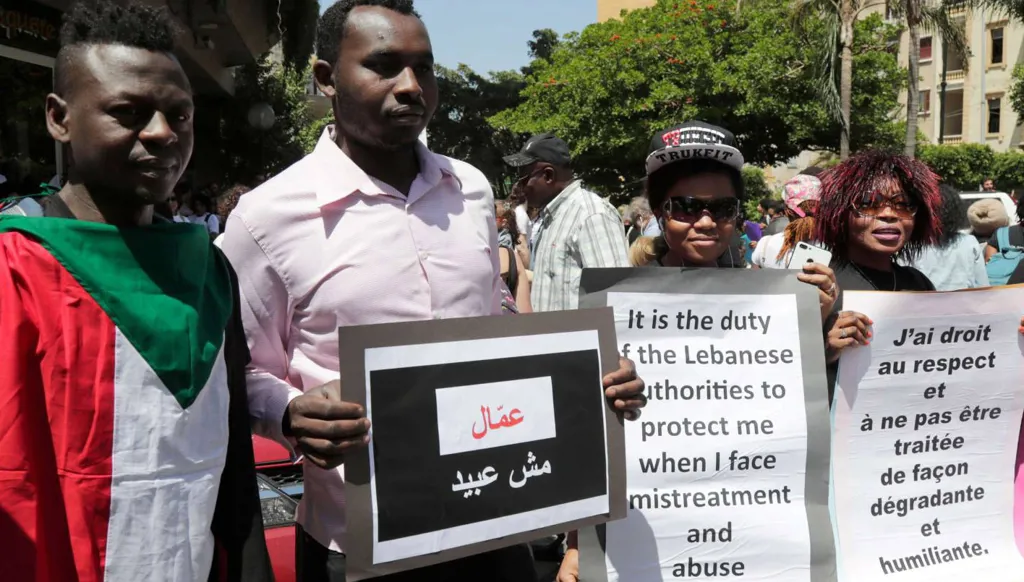


Foreign labor, which forms a fundamental pillar of Lebanese society, is a broad category that is often overlooked in public recognition, including on Labor Day.
It is difficult to imagine Lebanon without those who clean our homes and remove waste from our streets, or those who stand on iron scaffolding to build our buildings, or the workers at petrol stations who ensure the continuity of our daily lives.
These are jobs that may appear simple in status, yet they are immense in their impact on the daily functioning of life. Many Lebanese do not accept them, either for economic reasons or because of what is known as “prestige.” The paradox is that those who perform these roles are often subjected to clear discrimination and are treated according to their nationality.
In everyday scenes, these disparities are reinforced: who is allowed to enter swimming pools and public spaces and who is denied access, who is addressed as “Madam” or “Sir” and who is reduced to their nationality, who is viewed as an “expatriate” and who is classified as a domestic worker or caretaker. Here, the discussion about foreign labor is no longer limited to numbers or economic necessity but has taken on a distinctly class-based dimension.
Figures revealing dependence and inequality
According to researcher Mohammad Shamseddine from “International Information,” the number of foreign workers in Lebanon in 2018 reached around 269,645 workers holding work permits, in addition to approximately 100,000 workers without permits. In 2019, about 247,168 workers were recorded. However, with the worsening economic crisis and the COVID-19 pandemic, the number gradually declined, reaching 85,477 in 2023. It then rose again in 2025 to around 110,530 workers.
Shamseddine indicates that nearly half of this labor force is of Ethiopian nationality, alongside a growing number of workers from other African countries such as Ghana, Cameroon, and Senegal, in contrast to a noticeable decline in Indian, Sri Lankan, and Filipino workers, who have become more costly.
In reality, these figures do not only reflect the scale of dependence, but also the nature of distribution: the majority of domestic workers come from African or Asian countries, and these groups are the most exposed to discrimination.
Cultural practices above the law
The specialist in humanitarian work and civil society, Dr. Lynn Janbain, emphasizes that “the treatment of foreign workers is often not based solely on legal status or type of work, but is also influenced by factors linked to nationality, skin color, social class, and historically rooted stereotypes.
Many therefore feel that there is an unspoken hierarchy: a worker coming from European or Western countries is treated socially in a different way from female workers arriving from African or Asian countries, even though they are all foreigners performing similar jobs. This reality does exist and is repeatedly documented by human rights and media organizations.”
Due to instances of direct racial discrimination at times, and the class-based perception attached to certain professions, particularly domestic work, as well as social assumptions that a “domestic worker” is not a client but rather a companion to the family or an “employee,” Janbain stresses that this reflects a clear double standard. “The image of the foreign worker is associated with poverty or lower social status, while Europeans or Westerners are perceived in a more acceptable and socially respectful way.”
In addition, the head of the National Human Rights Commission, including the Committee for the Prevention of Torture, Fadi Gerges, considers that “the problem is rooted in the social structure itself, as inequalities already exist among Lebanese people themselves, which is reflected in the way others are treated. He affirms that the core of the crisis lies in the absence of a culture of human rights.”
He also notes that “domestic workers are the most affected group, as they lack effective means to claim their rights or hold employers accountable in cases of unpaid wages, which may place them in conditions resembling forms of slavery, something unworthy of a country like Lebanon."
Does the system entrench inequality?
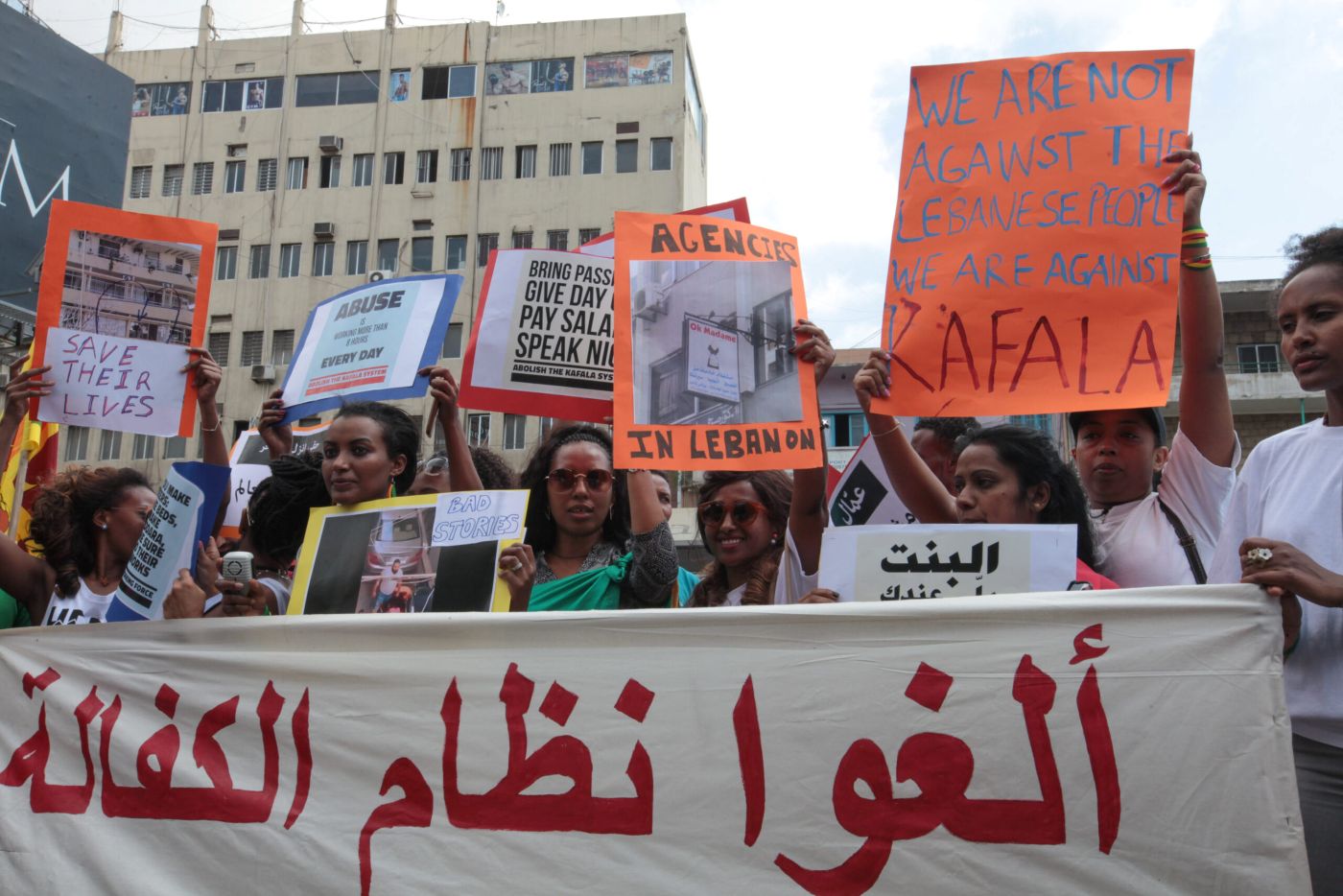
For his part, lawyer and university professor Fadi Hashem argues that there are two categories of foreign workers: one group is subject to labor law, while the other falls under the sponsorship system, which is the most vulnerable to violations such as violence and sexual harassment. This latter category often includes domestic workers from African countries.
He notes that this system was established in the absence of Lebanon’s ratification of the international convention on the protection of migrant workers.
He describes the sponsorship system as “a form of modern slavery,” given the restrictions it imposes on workers’ freedom and the fact that their residency is tied to their employer.
He also points out that the level of protection varies according to nationality, as workers from countries with active embassies in Lebanon enjoy greater protection compared to those from countries with limited or no diplomatic representation.
For his part, the head of the Lebanese Center for Human Rights, Wadih Al-Asmar, notes that the core problem lies in the legal imbalance between rights and obligations in labor law, depending on how workers are categorized. He points out that domestic workers are often placed in lower categories without meaningful rights.
He adds: “Someone coming from Europe, the United States, or Canada is seen as an expatriate, while a person coming from Third World countries is classified as a caretaker or domestic worker,” considering that the law in its current form contributes to entrenching this discrimination and “helps Lebanese society be racist, because it differentiates between categories, even though such discrimination should not affect basic rights.”
In contrast, Janbain argues that “the debate in Lebanon is not black or white, as there is indeed racial and class-based discrimination against certain nationalities, particularly African and Asian ones.
There are also real social and security concerns among some Lebanese due to the weakness of state institutions.
Therefore, abolishing the "Kafala" sponsorship system alone is not sufficient unless it is accompanied by clear labor laws, oversight mechanisms, accountability, and a fair legal framework that protects the rights of both workers and employers.”