Is the UAE withdrawing from multilateral organizations?
Amid speculation fueled by recent policy shifts and regional tensions, Emirati officials say there are no current plans for withdrawals, but a reassessment of international roles is underway.
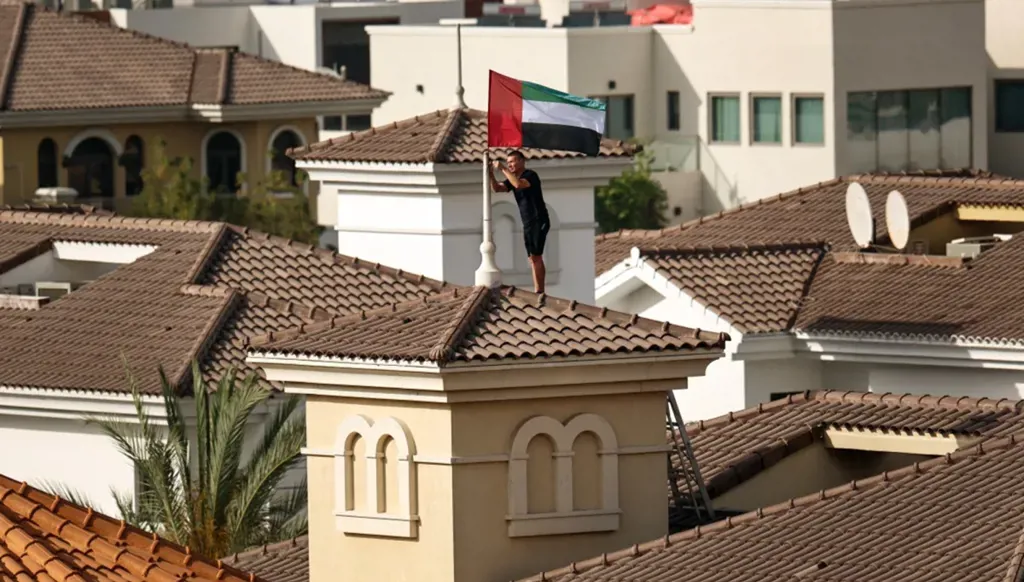
A UAE citizen places his country’s flag on top of his house in Dubai. (AFP)
Over the past two consecutive days, the United Arab Emirates sent a clear message: things will not remain as they are, neither politically nor economically, but it is not currently considering any withdrawals from multilateral organizations, according to an Emirati official.
Before the announcement of an emergency consultative summit of Gulf Cooperation Council states in Jeddah on Tuesday had been made, Dr Anwar Gargash, the diplomatic adviser to the President of the United Arab Emirates, spoke in the clearest terms in criticizing the weakness of the Gulf Cooperation Council’s position toward Iran, nearly two months after it began targeting Gulf states with missiles and drones, in the context of the war between it and the United States and Israel.
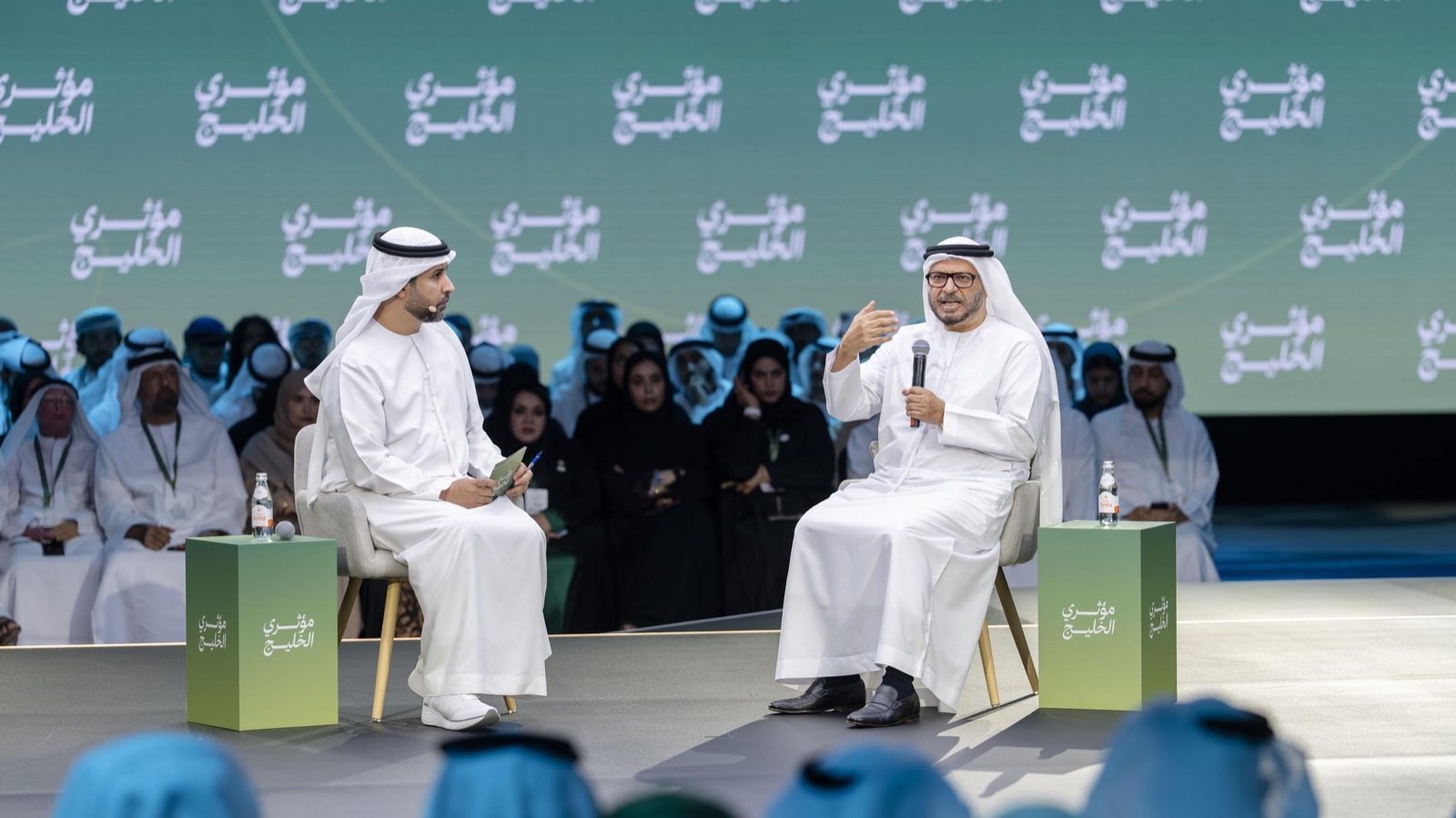
“Unfortunately, the Gulf Cooperation Council’s position has been the weakest in its history, given the nature of the attack and the nature of the threat affecting everyone,” Gargash said on Monday during one of the sessions of the Gulf Influencers Forum, the dialogue platform organized in Dubai by the UAE Government Media Office.
He added: “I would expect such a weak position from the Arab League and I am not surprised by it, but I do not expect it from the Gulf Cooperation Council and I am surprised by it.”
These remarks were a clear indication that the Emirati dissatisfaction, which has been expressed repeatedly since the early days of the war and the targeting of the UAE, which has been the most affected by Iranian attacks, will not remain within the circle of angry positions, but is moving toward more fundamental directions that are shaping a new Emirati policy with a distinct character on more than one level.
The Emirati official who spoke without revealing his identity says that his country fully understands the complexities of the existing dynamics and is focused on strengthening its resilience and the resilience of its partners and friends, which is reflected in the new directions.
Gargash speaking at the Gulf Influencers Forum in Dubai. (WAM)
The “Jeddah consultative summit is a step in the right direction.”
It did not take long before it was announced that Jeddah would host an emergency consultative Gulf summit, at which the UAE was represented by Deputy Prime Minister and Minister of Foreign Affairs Sheikh Abdullah bin Zayed, and which was chaired by Saudi Crown Prince Mohammed bin Salman.
The news that preceded the Emirati minister to the summit was the UAE’s withdrawal from OPEC and OPEC+, an announcement that attracted global attention at various political and economic levels, given what it signified as a decisive Emirati move in setting future choices, particularly on issues affecting the country’s interests and its citizens, especially in terms of security and living stability.
The Emirati official adds, commenting on the Jeddah summit, that the exceptional session is a good first step in the right direction. He also said that there is still much that needs to be done in light of a fragile and turbulent environment.
The Gulf leaders in Jeddah affirmed the right of the member states to defend themselves, individually or collectively, in accordance with Article 51 of the United Nations Charter, and to take all necessary measures to protect their sovereignty, security, and stability.
They also stressed full solidarity among the member states, that the security of their countries is indivisible, and that any attack on any member state is considered a direct attack on all of them, in line with the provisions of the Joint Defense Agreement of the Gulf Cooperation Council states.
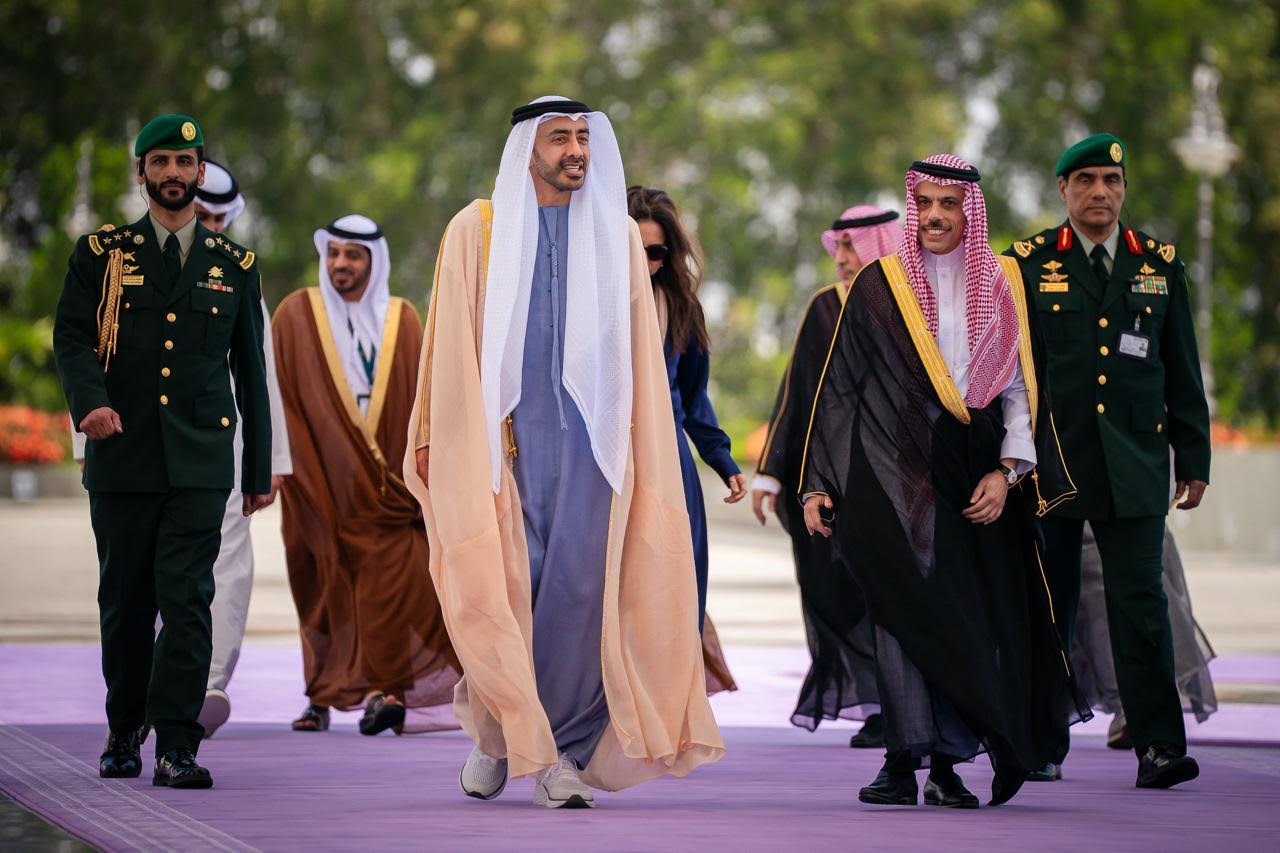
Saudi Foreign Minister Prince Faisal bin Farhan receiving UAE Foreign Minister Sheikh Abdullah bin Zayed in Jeddah. (WAM)
Is the UAE withdrawing from multilateral organizations?
Sheikh Abdullah bin Zayed stated in his speech that “the current phase requires the highest levels of coordination and integration to address regional challenges and confront all forms of extremism and terrorism, in a way that helps safeguard the security and stability of our countries and peoples.”
He stressed that “the security of the Gulf Cooperation Council states is indivisible, and any threat to the sovereignty of any member state is a direct threat to the security of the entire Gulf system.”
The Emirati Foreign Minister reaffirmed his country’s firm commitment to “supporting the Gulf Cooperation Council’s path and strengthening its pivotal role in consolidating security, stability, and sustainable development in the region.”
The Emirati positions criticizing the performance of the Gulf Cooperation Council and then the withdrawal from OPEC and OPEC+ have raised speculation about whether the UAE intends to move toward further decisive decisions, including even withdrawal from the Gulf Cooperation Council itself.
However, the Emirati official who spoke without revealing his identity confirmed that “at the present time the UAE is not considering any withdrawals,” but that with regard to multilateral organizations it is “reassessing the suitability and effectiveness of its role and its contribution at various levels.”
The fact that Iran has concentrated its attacks on the UAE has led many Emirati politicians, researchers, and analysts to speak about the need to rethink the classification of enemies and friends.
This was also referred to by Gargash during his remarks at the Influencers Forum, where he spoke about the victory of “the position that views Iran as an aggressive state rather than a neighbor that can be contained,” stressing that “policies of containment have failed completely, and we are today facing an important review.”



 Messenger
 Whatsapp
 Threads
 Email
Email
 Print
Print
 X
X
 Facebook