

The hidden cost of war: A global economic shock beyond the battlefield


 Messenger
 Whatsapp
 Threads
 Email
Email
 Print
Print
 X
X
 Facebook
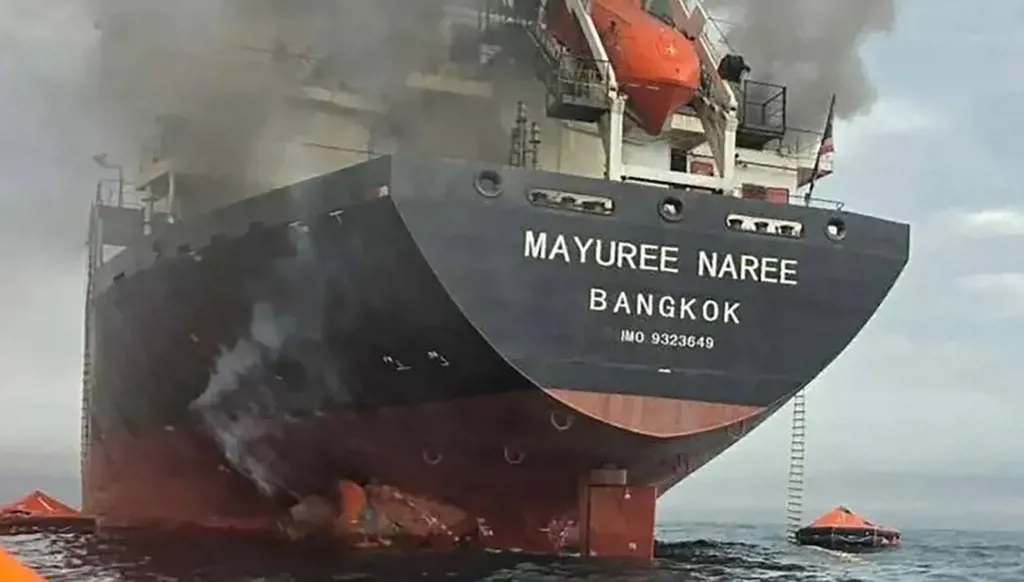


The war in Iran, from its very first day, has gone beyond the threshold of a regional conflict and has become a structural shock to the global economic system, with its cost so far exceeding 600 billion dollars, according to a recent study published by Thierry Breton, the former European Commissioner for the Internal Market, Industrial Policy, Defence and Space between 2019 and 2024.
To analyze the dimensions of this catastrophe, Breton proposes a framework of five concentric circles that begin at the heart of Iran and extend to global financial balances, revealing the fragility of globalization in the face of major crises.
Breton's 'five circles'
The first circle is Iran itself, at the center of the storm. Iran today is living through a real war economy, amid hyperinflation that has reached 50.6 percent in recent weeks. The war has led to the destruction of industrial infrastructure, disruption of logistics flows, and erosion of tax revenues. Despite attempts by the regime to withstand the pressure, the Iranian economy has become entirely dependent on China as its only lifeline, with oil being sold at discounted prices in exchange for yuan or through barter systems, placing Tehran in a state of near total economic dependency.
In the second and third circles, we find the Gulf and China, positioned between rent and risk. Gulf countries are in an unprecedented situation: they are the main beneficiaries of rising oil prices, but they are also suffering from instability. Saudi Arabia, for example, benefits from increased revenues to finance Vision 2030 projects, but its facilities remain under the threat of bombardment. The targeting of liquefied gas facilities in Qatar has also revealed the fragility of global supply chains, as Doha provides 30 percent of China’s needs and 20 percent of global supply.
As for China in the third circle, it is the most affected nonbelligerent party, as 45 percent of its oil imports pass through the Strait of Hormuz. Despite its relative resilience and 5 percent growth in the first quarter of 2026 thanks to strategic reserves, the real threat lies in the destruction of global demand in Europe and emerging markets, which could completely undermine its export driven model.
In the fourth circle, there is Europe, which is experiencing a renewed risk of stagflation, as gas prices have surged by 50 percent since the first days of the conflict. The European Commission expects inflation to reach 4.4 percent in severe scenarios, with growth not exceeding 0.8 percent.
In France, for example, the conflict has already cost the public budget around 6 billion euros. The largest share of this cost, 3.8 billion euros, comes from rising interest rates on sovereign debt, in addition to an increase in the defense budget, which has reached 57 billion euros, and the cost of military operations in the region, which exceeds 135 million euros per month.
In the fifth circle, there is the global financial system and the transformation of the petrodollar. The deepest shocks are occurring in this sphere, where the world is witnessing a credit crisis and a restructuring of capital flows. Gulf countries are increasingly moving to reduce “petrodollar recycling” into US and Western bonds, redirecting investments toward Asia or domestic projects.
This shift weakens the West’s ability to finance its budget deficits at low cost and represents a test for the financial dominance of the US dollar.
The hidden cost of the war according to Breton
However, Commissioner Breton believes that the “hidden cost” of this war is not limited to gross domestic product, but extends to catastrophic human and social dimensions, citing estimates from the United Nations Development Programme that the conflict could destroy 3.7 million jobs in the Arab region and push 4 million people into poverty.
Ultimately, this war places the world before two choices: either continuing the policy of “patchwork solutions” and crisis management or moving toward a structural transformation in the form of energy sovereignty based on clean energy and reduced dependence on hydrocarbons.
This war is not merely an oil shock, but a “moment of truth” that will determine who managed to turn the shock into an opportunity for change, and who will remain trapped by its consequences for many years in the form of debt interest burdens and lost growth.
Disclaimer: The opinions expressed by the writers are their own and do not necessarily represent the views of Annahar.