

Iran’s internal divisions and the fragility of its foreign negotiations


 Messenger
 Whatsapp
 Threads
 Email
Email
 Print
Print
 X
X
 Facebook


It is true that Donald Trump says “everything and its opposite”, but this time he was not rambling when he pointed to divisions inside Tehran regarding the management of negotiations with Washington. There are indeed voices inside Iran that are attacking the negotiations.
It is enough that the unified slogan raised by Iranian officials, “One God, one leader, one nation, one path”, is itself evidence of disagreements over Iran’s leadership and its future after the war, which now stands at the ceasefire line.
The absence of the Supreme Leader Mojtaba Khamenei and the passing of every decision as if it were a decree from his orders raises concerns about Iran falling into a cycle of military rule, without any defined limit for when this phase might end.
For this reason, reformists and moderates express concern about the intentions of hardliners who live in imaginary worlds. The moderate camp is focused on the economy, development, and the country’s future, while the hardliners raise slogans and cling to them. They use the word “revolutionary” as a way to determine whether a person is loyal to the revolution or aligned with its enemies.
In contrast, the moderate camp emphasizes the word “national” to determine whether someone is working in the interest of the state or not, even if their vision is different and oppositional.
Divisions among conservatives
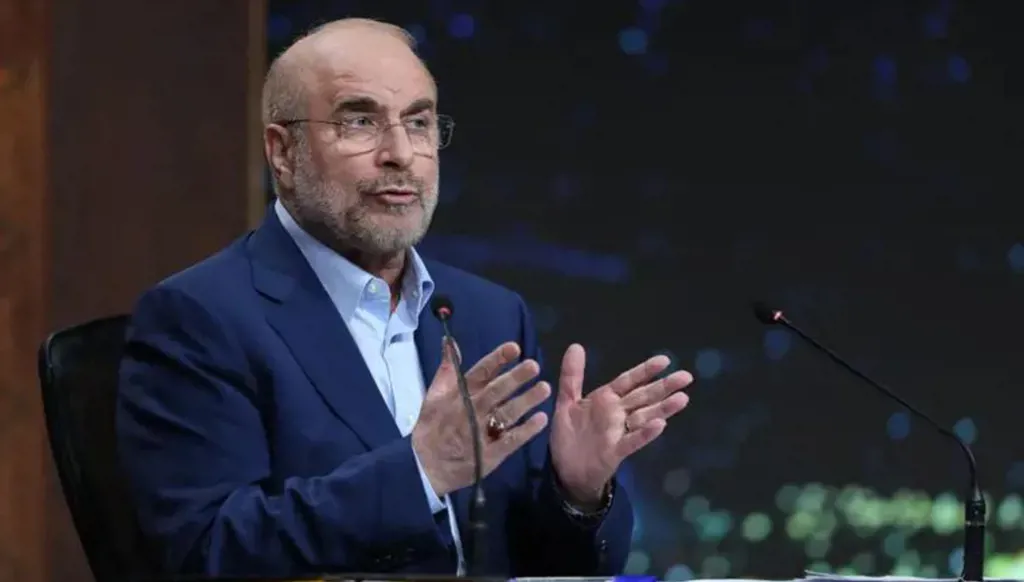
It is well known that the conservative current inside Iran is split between two poles, hardline and moderate. This is the camp that is experiencing deeper internal division than the reformist camp, whose main goal is ending the war. Even the Speaker of Parliament, Mohammad Bagher Qalibaf, who is considered part of the conservatives, has not been spared from their criticism, to the point that there were announcements that he had stepped down from leading the negotiating team, a claim that was later denied amid concerns about fragmentation in Iranian decision making.
This situation is attributed to radical figures such as MP Mahmoud Nabavian, a member of the hardline Principlist Front, known for his opposition to the nuclear deal and one of the prominent supporters of the shadow government led by failed presidential candidate Saeed Jalili, who headed nuclear negotiations during Mahmoud Ahmadinejad’s presidency, treating them as negotiations for their own sake rather than for stabilizing the country.
Despite this, Nabavian was part of the Iranian negotiating team, while at the same time openly opposing it, calling the negotiations a strategic mistake, accusing the negotiating team of betrayal, and demanding that they not go to a second round.
This state of disagreement led the newspaper Kayhan, known for its hardline stance, to express concern over the rising voices of extremists who are attacking the moderate wing of the conservatives. It even warned about infiltrators in nighttime gatherings who raise extremist slogans and speak in the name of revolutionary ideology.
This is another scene of division. The dominance of extremist voices in public spaces and streets in Iran has pushed a portion of moderates and reformists to stay away from participation. Even the newspaper Jomhouri Eslami, which is associated with the moderate conservative wing, indicated that those who raise revolutionary slogans have done more to benefit the American enemy through their loud shouting.
This shows that the Iranian internal landscape is not unified. Unity in confronting an enemy does not mean there is political unity, as the hardliners assume.
Lack of trust in a divided country
This situation of lack of cohesion within the Iranian negotiating team is the same condition Iran has been experiencing for years, especially after hardliners felt that their future and their revolutionary identity, from which they benefit politically and materially, were under threat following the rise of a reformist government under Mohammad Khatami between 1997 and 2005.
Concerns about the existence of two competing voices inside Iran were not only raised by Western countries. Regional powers also felt this reality, which is why they did not respond positively to calls for dialogue during the presidency of the reformist Hassan Rouhani.
His foreign minister, Mohammad Javad Zarif, repeatedly put forward regional initiatives aimed at resolving crises on both sides of the Gulf, including the Hormuz and Manara initiatives, both intended to establish regional peace and resolve the nuclear crisis.
Unfortunately, the voice of the hardliners was louder than that of the moderates, which led regional powers to look for actions rather than words.
Disclaimer: The opinions expressed by the writers are their own and do not necessarily represent the views of Annahar.