Iran, Trump, and the Gulf: Inside a dangerous war of decisions, miscalculations, and shifting global power balances

Opinion 24-05-2026 | 09:16

Iran, Trump, and the Gulf: Inside a dangerous war of decisions, miscalculations, and shifting global power balances

A high-stakes confrontation stretching from Washington to Tehran, with the Gulf caught in the middle as global powers recalibrate their strategies.

Iran, Trump, and the Gulf: Inside a dangerous war of decisions, miscalculations, and shifting global power balances
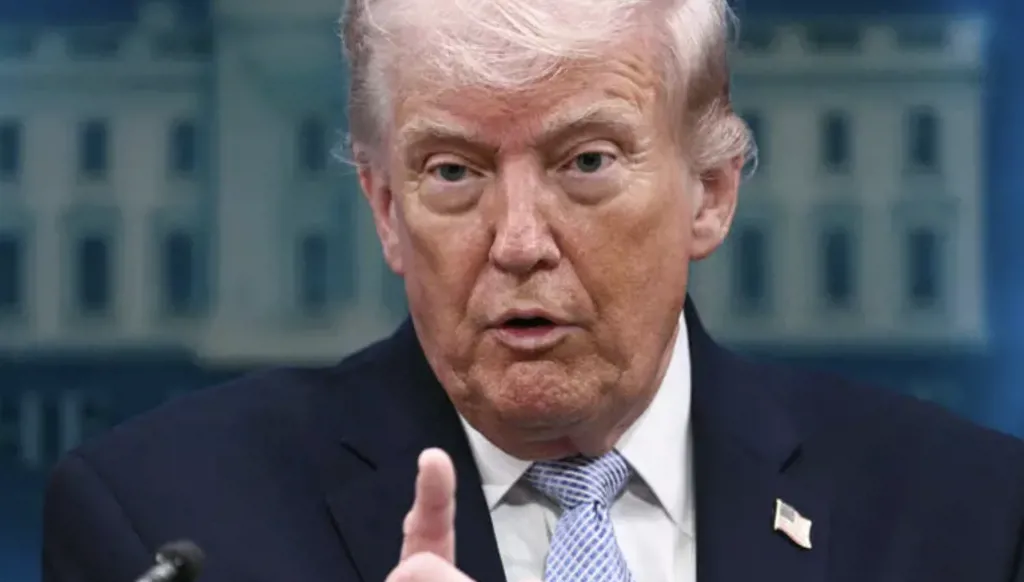
The American president now faces a precise equation (AFP)
Smaller Bigger


The predicament facing U.S. President Donald Trump today in his confrontation with the Islamic Republic of Iran is no longer confined to the nuclear issue, the postponed decision on a military strike, or even the Strait of Hormuz alone.


The bigger predicament is that this war, both in how it began and how it is now being managed, appears to be a strange and unfinished one. Washington entered it with incomplete intelligence and military confidence, only to discover that Iran has no intention of fighting the battle in the arena desired by the United States or Israel, but rather in arenas it considers weaker, easier, and closer at hand: the Arab Gulf states.


It’s not a tactical matter 


Iran is incapable of directly retaliating against the United States and equally incapable of delivering a decisive blow to Israel without paying an existential price. It has therefore decided that revenge will be carried out in the Gulf. This is not a temporary tactical calculation, but rather part of a mindset that has shaped Iranian doctrine for decades — one that seeks the submission of the Gulf Arab states and revenge against them, while remaining haunted by the Iraq War and its repercussions. Nor is it solely about the Iraq War; since 1979, the religious leadership of the Islamic Republic of Iran has looked down upon the modern, liberal vision embraced by the Gulf Arab states.


Tehran views the Gulf as a backyard that can be cheaply targeted with drones and missiles, relying on its proxies in Iraq and elsewhere to deliver messages and carry out attacks whenever it finds itself unable to confront major adversaries directly.


For this reason, the Gulf Arab states appealed to President Trump not to rush into a major strike. Saudi Arabia, Qatar, the UAE, and others understand that any large-scale U.S. military operation against Iran could leave them as the primary targets of Iranian retaliation, rather than Washington or Tel Aviv.


These countries requested additional time, not out of naïve faith in any confirmed Iranian flexibility, but to test the possibility of persuading Tehran to step back from its self-destructive course before a regional war erupts. The time required is not open-ended, and no one in the Gulf believes a prolonged respite lies ahead. Still, there is a need to try to salvage what can be salvaged from the consequences of a war that could spiral into a regional conflict — and possibly beyond.


In Washington, some viewed the Gulf request as an opportunity to buy time before launching a major military operation. Some officials even suggested that the Gulf states make the appeal for delay because it aligned with the wishes of the American president, who remains hesitant about making the decision to resume the war.


The Pentagon does not want an open-ended gap between delay and escalation, and has informed the U.S. president that dithering is not a strategy. Trump himself is facing significant internal pressure to make a decision: either move toward military action or withdraw the threat with a clear face-saving exit. As a result, Trump reiterated that the truce or postponement will not last long. The discussion is now measured in days, not weeks, as the military establishment is effectively saying “enough,” while Trump insists that his patience, too, is running out.


The U.S. president now faces a precise equation: shuttle diplomacy and drawn-out negotiations are no longer seen as beneficial, but increasingly as a liability, as time is working against him. The American assessment is that Iran will not concede on the core demands insisted upon by Washington — particularly regarding the nuclear issue — unless it fully grasps the extent of Trump’s military capabilities.

As a result, several options have been placed before him, chief among them what officials in Washington have come to call the “seven keys” — a framework for a cumulative and highly complex operation involving specific targets designed to allow the United States to inflict a serious defeat on Iran, rather than merely carrying out a symbolic or punitive strike.


A significant shift


These goals, as now proposed in U.S. military thinking, include energy infrastructure, communications systems, social media networks, military installations in the Strait of Hormuz, nuclear research sites, Revolutionary Guard leadership centers, and possibly the leaders themselves. This means that, if it occurs, the operation would not be a limited, focused strike but rather a significant shift in U.S. military posture toward Iran, aiming to paralyze the capabilities that enable the Iranian regime to continue threatening, exerting pressure, and carrying out retaliation through missiles, drones, and proxy forces.


But the problem is that the war was not sufficiently studied from the outset in light of clear Iranian threats to expand it into a regional conflict. There is responsibility on American and Israeli intelligence for not fully placing Trump in the real picture, much like President Vladimir Putin’s miscalculations when he entered Ukraine expecting a swift, limited war that instead turned into a historic drain.


Trump now faces a similar possibility, albeit in a different arena: a major strike could achieve military objectives but might also open regional pathways that Washington is not fully prepared to contain.


More critically, the error was not merely in underestimating Iranian military capabilities, but in misreading the doctrine guiding Tehran’s leaders and the form of retaliation they publicly vowed. Did the Trump administration rush into war without considering that Iranian retaliation might not be limited to striking American bases in the Gulf Arab states, but could also target the deep infrastructure of Gulf states allied with the United States?


Was this the result of an arbitrary decision to go to war, a deeper strategic calculation, or a major failure within the American intelligence and military establishment? The question also extends to key negotiators Jared Kushner and Steve Witkoff: did they misread Tehran’s mentality and the ideology of the Revolutionary Guard, or were their assessments shaped by an overly optimistic belief in the prospects of a deal that led them to underestimate these risks?


The essential question is whether this predicament stems from Donald Trump’s highly personalized style of decision-making—where major U.S. choices, including wars, markets, and negotiations, are shaped by his individual instincts—or from a deeper structural flaw within the American decision-making system itself.


Threat from proxies


There is now an attempt to reach a document that would serve as a starting point for ending or freezing the war. But any agreement limited to the nuclear issue would be incomplete if it ignores Iran’s missiles, drones, and proxy forces. The Gulf states are concerned with Iran’s proxies as much as with the nuclear file, and at times even more, because the daily threat comes from these groups and the retaliatory mindset that drives them.


Trump wants to confirm American nuclear priorities, as he needs an exit that justifies both why he entered this confrontation and why he might step away from it. He seeks to frame the outcome in a way that allows him to claim a degree of success, while Iran, for its part, aims to assert that it did not surrender. As a result, saving face becomes essential for both sides.

However, reputational balance is not enough if Iran continues to exert influence over the Strait of Hormuz, set terms on the nuclear file, and retain the capacity to deploy its proxy networks against Arab states. In this context, wording and political framing matter greatly, but they cannot conceal the weaknesses of any agreement that fails to directly address broader regional Iranian threats.


China and Russia are present in this scenario. Each has a strategic agreement with Iran, and both also maintain deep interests with Gulf states.


China has entered the negotiation line to assist Pakistan and is also seen as trying to encourage Tehran toward a degree of flexibility that could allow Trump a controlled exit from the crisis. Russia, in its relations with both China and Iran, is viewing the situation through the broader lens of long-term strategic competition with the United States and China.


China is unlikely to act as an official guarantor for any American-Iranian agreement, and its role appears closer to signaling to Iranian leaders to avoid dominating the Strait of Hormuz and to prevent the conflict from escalating into an open regional confrontation. China operates primarily through the language of interests. Its long-term strategic relationship with Iran could, however, push it in a different direction if its core priorities are affected. It should also be noted that Iran maintains strategic agreements with both China and Russia.


Moreover, it should not be forgotten that Donald Trump’s original objective was to keep China and Russia away from Iran, but that effort ultimately failed. He failed because of a combination of mismanaged escalation, hesitation, and the strategic constraints created by that hesitation itself.


Russia benefited from this war by increasing the demand for its oil and gas, while Europe appears to be the biggest loser, emerging from it fragmented and forced to turn to Moscow on the eve of winter to secure Russian gas supplies.


China is emerging as the biggest strategic winner, appearing as a calm major power receiving leaders and managing balances, while the United States is seen as a superpower that appears volatile and tense, and unable to translate military strength into calculated political outcomes.


The main Iranian negotiator, Revolutionary Guard Commander Ahmad Vahidi, is in itself an indication of the difficulty of reaching a substantive agreement. He comes from the core of the Islamic Revolutionary Guard Corps and from a doctrinal framework that is reluctant to concede or surrender. Negotiating with him effectively means engaging with a governance structure that regards flexibility as weakness and treats retaliation as part of its political and military toolkit.


Thus, there is no logic in assuming that Iran is about to make real concessions unless it clearly sees that the American “seven keys” are not merely verbal threats, but a fully prepared plan capable of striking its leadership, military, oil, nuclear, and communications infrastructure.


We are thus at an extremely dangerous transitional moment. Washington is trying to draft a document that preserves Trump’s political positioning without making it appear as though he merely bought time for Iran. China and Russia are reassessing their strategic investment in Iran. Meanwhile, Tehran is attempting to signal that it has not surrendered, while at the same time preparing to retaliate against the Gulf if it comes under strike.

Time is no longer an opportunity but a cost, and the war is no longer a test of the Islamic Republic of Iran alone but has become a test for the United States. This predicament reveals the risks of Donald Trump’s personalization of major decisions, including wars and financial markets. Equally concerning is the possibility of an organic flaw within the American intelligence and military establishment. In both cases, the United States may pay the price for strategic miscalculation, opening the door to an incomplete or arbitrary war that could be on the brink of unforeseen and greater losses.